Repair or Replace? How to Read Your Rochester Roof
Not every roof that worries a homeowner needs replacing. Some do. Here is how we tell them apart.
Read the guideA roof can take a real hail hit and still look, from the driveway, fine.
A roof can take a real hail hit and still look, from the driveway, fine. That’s not a marketing line. It’s genuinely how hail damage often shows up on an asphalt roof: damage you can’t see without getting close. Granules knocked loose, a shingle weakened at the point of impact, nothing that shows from the ground. That’s the reason an inspection happens shingle by shingle, not from the yard.
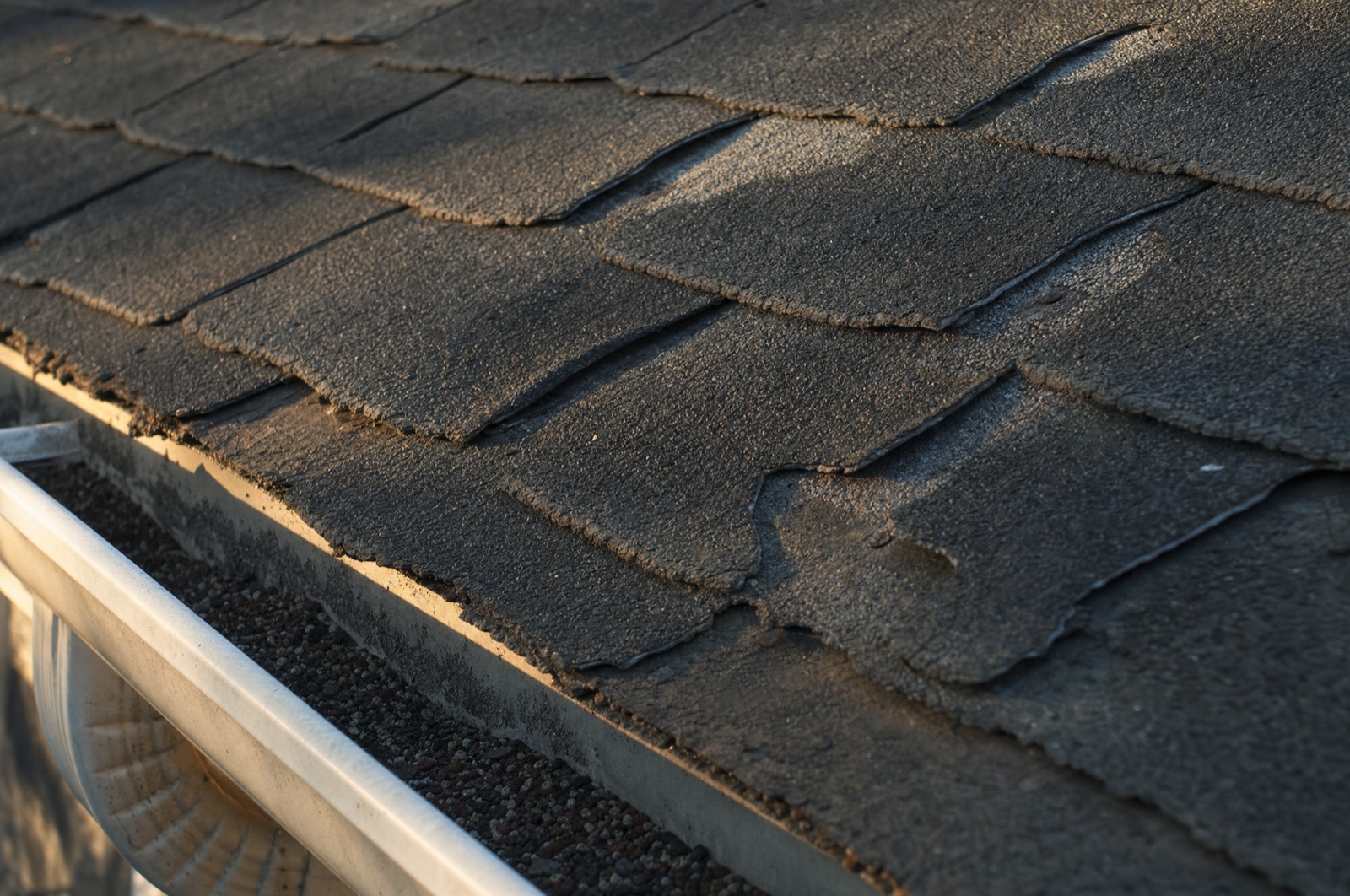
Asphalt shingles are built in layers: a base mat, an asphalt coating, and a top layer of mineral granules that shields the asphalt underneath from sun and weather. A hard enough hail strike can crack a shingle outright, which is visible once you know where to look. It can also knock granules loose or weaken a shingle at the point of impact without breaking the surface at all. That kind of damage doesn’t announce itself the way a leak does, and it can look enough like ordinary granule loss from age that telling the two apart is genuinely a job for someone who inspects roofs, not a glance from the yard.
Start below the roofline, since it’s faster and safer to check first: dented gutters and downspouts, dinged air conditioner fins, cracked or dented vinyl siding on the side of the house the storm hit. Soft metal shows a hail strike clearly, and if it took one, that’s a reason to have the roof looked at, not proof the roof itself was hit. Shingles and aluminum gutters take an impact differently, so ground-level damage is a prompt to check, not a diagnosis by itself. On the roof itself, if you can see it safely: scattered dark spots where granules have been knocked loose, different from the even, gradual wear pattern of an aging roof.
None of that is a substitute for someone actually walking the roof.
Storm came through your area? A Noble Edge roof inspection is free, and it comes with photographs of exactly what we find, no pressure to book anything after.
Don’t get on a ladder to check this yourself if you’re not already comfortable up there. A fall is a far worse outcome than a delayed inspection, and hail damage on its own is rarely as urgent as an active leak. If a storm with hail came through your area, that’s worth a call regardless of what you can or can’t see from the ground. If you’re already seeing a stain inside the house, say so when you call: an active leak changes the order we work in.
Storm damage often turns into an insurance question, and that’s usually where homeowners get stuck, not because the claim itself is complicated, but because they’re not sure what evidence a carrier actually needs to see. We inspect, photograph what we find, and put together a written scope of the damage you can hand to your carrier, one an adjuster can follow. We will tell you plainly what we think it amounts to, including when we don’t think it amounts to a claim: if a claim gets denied, you’re still paying for the repair yourself, so that’s not a call we make lightly.
That’s a reasonable place to be. Hail damage and ordinary wear genuinely can look alike from a distance, and telling them apart is the actual point of an inspection, not a sales pitch. It’s free, and it comes with photographs of exactly what we found, whatever that turns out to be.
Not every roof that worries a homeowner needs replacing. Some do. Here is how we tell them apart.
Read the guideRochester gets the kind of winter that builds ice dams almost every year, a lake-effect pattern, not bad luck.
Read the guideHonest answers. No pressure. Start with a free estimate.
More from Noble Edge