Repair or Replace? How to Read Your Rochester Roof
Not every roof that worries a homeowner needs replacing. Some do. Here is how we tell them apart.
Read the guideMost siding calls start the same way: someone noticed damage in one spot and wants to know if that means the whole house needs new siding, or just that one section.
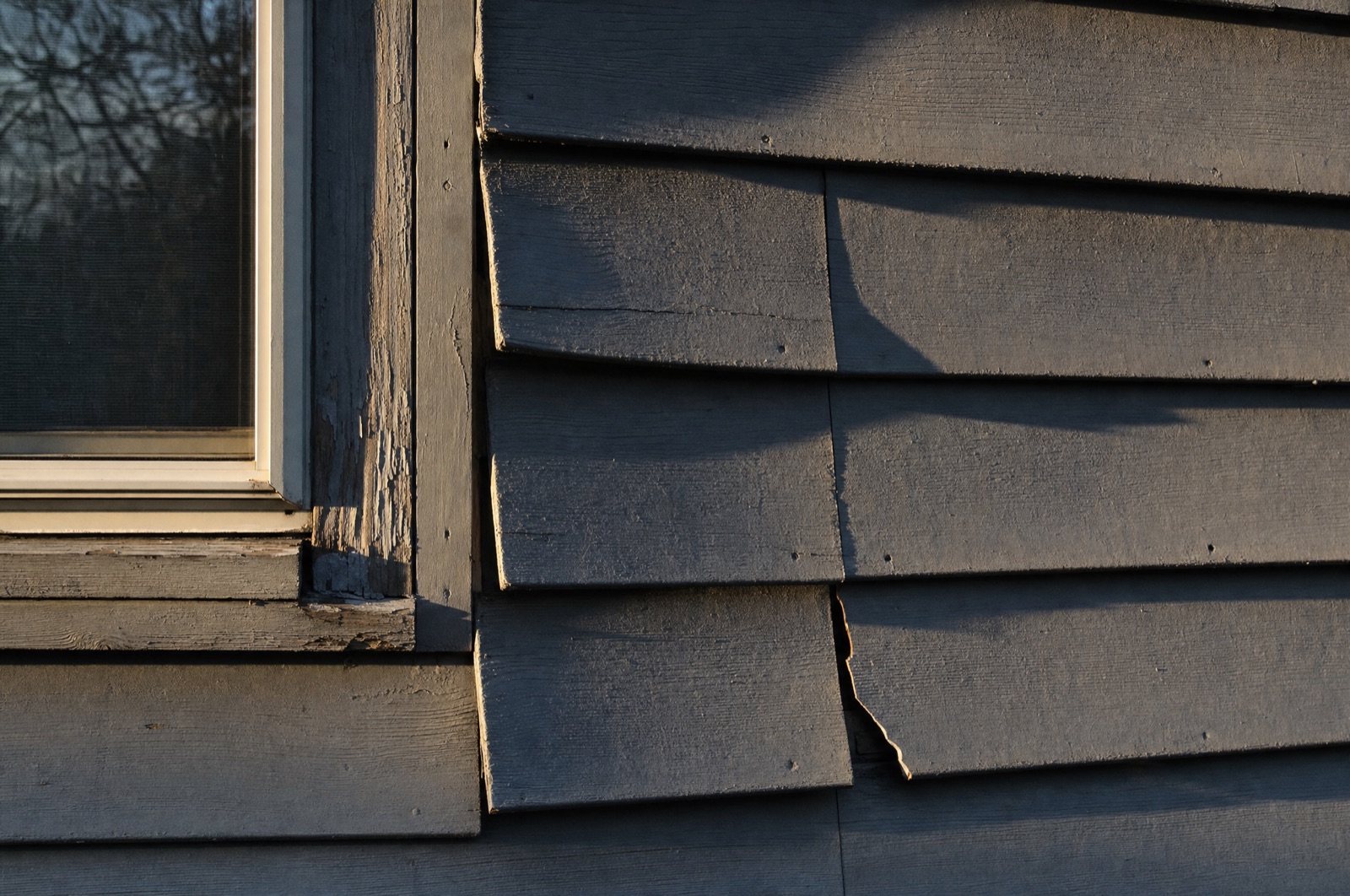
Failing siding, the decision point this guide walks through
Most siding calls start the same way: someone noticed damage in one spot and wants to know if that means the whole house needs new siding, or just that one section. The honest answer depends less on how old the siding looks than on what’s actually happening behind it: whether water got in, and whether it stayed where you can see it.
A twenty-year-old wall can be sound. A five-year-old wall can have a real problem if water found a way in early and nobody caught it. Age is a clue, not a verdict. What actually matters: is water getting behind the siding anywhere, is the sheathing underneath still solid, and is the damage contained to one area or spread across the house.
The free inspection looks at more than the panel that’s obviously damaged: the elevations around it, the trim, the seams around every opening, and behind a panel where we can. What sound-looking siding is hiding underneath is a real question that walk-through can’t always fully answer. The honest limit is that nobody knows for certain what a wall is doing until a section actually comes off. If that happens as part of a repair, we open only what’s damaged. If it’s a full replacement, the sheathing is exposed as the old material comes off, and if we find rot or soft spots then, work stops on that elevation and we show you in photographs before doing anything else. Either way, we tell you what we saw and what we think it means, in plain language, before any conversation about cost.
If it’s a repair, we’ll say so, even though that’s the smaller job for us. If it’s a replacement, we’ll show you why: which elevations, which section of sheathing, which pattern of damage, rather than asking you to take our word for it.
Not sure which side of that line your siding is on? A Noble Edge inspection is free, and it comes with photographs of exactly what we find.
A repair fixes what’s in front of it. It can’t tell you what’s happening behind siding we haven’t opened, and it can’t extend the life of a system that’s already reached the end of its service life everywhere else. If a patch needs another patch a season later somewhere new, that pattern itself is the answer.
That’s what the inspection is for. It’s free, and it comes with photographs of exactly what we found, whether that’s one panel or the whole exterior, so you’re deciding from the same information we are, not taking our word for it.
Not every roof that worries a homeowner needs replacing. Some do. Here is how we tell them apart.
Read the guideHonest answers. No pressure. Start with a free estimate.
More from Noble Edge